top of page
IMG_0839 copy 2.webp
Two hands are pulling a Japanese hand plane across a chopstick stock on a wooden jig. The jig is set on a grey table top. All across the table are other wooden jig compenents, wood shavings, pencils, and a wooden mallet.

Chopstick Making

Make Your Own Chopsticks: A Taste of Woodworking is a unique, hands-on woodcrafting experience where participants are taught how to safely use a Japanese hand plane and guided through the chopstick shaping process with custom designed, hand built wooden jigs and fixtures. Participants can personalize their bespoke pair of chopsticks with a laser engraving of their choice.


​Through stories of dining cultures from different countries, this workshop explores the chopstick design process in a way that stimulates deeper cultural understanding and illustrates how a simple utensil can actually act as a manifestation tool towards cultivating community and connection.​ Participants are encouraged to reflect inward as they customize and shape their chopsticks to better align with the lifestyle they wish to embody moving forward.

Three workshop participants are at a table planing their chopsticks, and Ali the instructor is standing at the edge of the table smiling as she watches the participants.
Ali is holding up a hand plane and demonstrating to one of the students, who is standing next to her and looking at the hand plane.

(Photography by Brian Chen)

KEY FEATURES

  • Workshops typically last three hours, with an additional two hours beforehand for unloading and set up, and one hour afterwards for clean up

  • Laser engraving included

  • All tools and materials provided

  • No prior woodworking experience needed

  • Max. 12 participants per session (multiple sessions can be arranged for larger groups)

  • Ages 13+ only

Two women are standing in at a work bench, one is working at the jig set and flipping over a chopstick, while the other is standing at the side leaning in and looking at the chopstick.

(Photography by Brian Chen)

location

The workshop can be hosted at your location (as we coordinate I can visit your site to confirm compatibility), or I can work with you to secure an alternate venue. I’m based in Los Angeles (Koreatown) but may be open to traveling depending on distance and capacity.

Workshop Facilitation Fee

Total fees vary based on participant count and group structure (single or multiple sessions). All tools and materials are provided and prepared by me, which is reflected in the rate. A flat fee covers local travel within Los Angeles, as well as setup and cleanup. For locations beyond the LA area, a distance-based surcharge will be added. Once you submit the inquiry form below, I’ll follow up with a personalized quote.

A student is crouched down to be eye level with the chopstick making jig, and she's using both hands to position the chopstick in the jig while using one eye only to focus on the placement.

(Photography by Brian Chen)

QUESTIONS?

A man is standing in front of a chopstick making jig and turning his chopstick over, while a woman is standing close by and providing instructions to him.

Email me at ali@alichenstudio.com. Thank you!​

CALENDAR

(Photography by Brian Chen)

WORKSHOP CALENDAR

Check out when I'll be hosting my next workshop! 

BOOK A WORKSHOP

The instructor Ali is hand planing their chopsticks on a chopstick making jig clamped to a grey table top. Ali has black hair and is wearing a black t-shirt with colorful graphics on it. All across the table are more wooden jig components.

Whether you’re looking to book an exclusive private workshop or a public workshop offering for your community, there’s something for everyone.

If you’re interested in booking a workshop with me, please submit an inquiry below and I will reach out to you with more information regarding customization, availability, and pricing.

Please double check your email address so I can be sure to reach you.

To help me get a sense of your goals and vision, please share as much as you’d like. Your thoughts will help me tailor the experience to your group.

BOOKINGS

Chopstick
care & maintenance

Chopsticks are to be hand washed only, with cold water and soap. Please do NOT place your hand crafted chopsticks into the dish washer, as they will warp.

Please avoid soaking the chopsticks in any liquids.

After some use, chopsticks will begin to show signs of wear (dry, dull, rough) and will require maintenance in order to look good as new. Below are maintenance instructions based on the available finish options from the workshop:
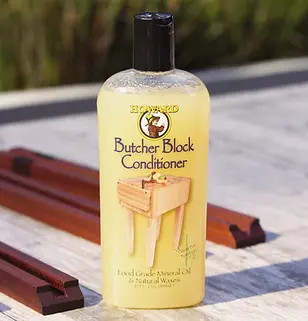
A 12 oz. bottle of Howard Butcher Block Conditioner is sitting atop a grey table top, with sunlight shining down on it from the left. Wooden jigs are in the background.

Butcher Block Conditioner

This is a blend of beeswax, Brazilian carnauba wax, and food grade mineral oil. It provides slight water resistance.

Upon signs of wear, you can:

  • Shake the mixture to ensure contents are mixed.

  • Squeeze a small amount onto a rag and wipe the conditioner onto chopsticks.

  • Allow the conditioner to soak in for a bit (up to 30 minutes recommended but could be sooner) before wiping off with a clean rag until the wood feels dry to the touch.

  • The longer you allow the finish to soak in, the deeper the finish will penetrate the wood.

food grade
mineral oil

Food grade mineral oil is vegan as it doesn't contain beeswax. It is non-toxic and food safe despite being derived from petroleum because it's been refined to remove harmful compounds.

Upon signs of wear, you can:

  • Either rub the oil onto the chopsticks with a small cloth, or submerge your chopsticks into a food grade mineral oil bath (up to 20 minutes recommended but could be sooner).

  • Wait a few minutes and then wipe off oil using a clean cloth, until wood feels dry to the touch.

  • The longer you submerge your chopsticks in the oil, the deeper the finish will penetrate the wood.

A 64 oz. jug of Thirteen Chefs Food Grade Mineral Oil is sitting atop a grey table top, with sunlight shining down on it from the left. Wooden jigs are in the background.
Three sticks of wood are sitting atop a grey table top, with sunlight shining down on it from the left. The wood types are walnut which has a dark brown tone, cherry which has a medium brown, slightly pinkish tone, and hard maple which has a very light, pale beige tone.

unfinished

Wood is naturally antibacterial and antimicrobial, and technically does not require a finish application.

Upon signs of wear, you can:

  • Lightly re-sand the chopsticks until they're smooth again.

  • Go from 180 grit to 220 grit to 320 grit.

  • If you want your eating tip to grip your food better, you can sand just the eating tip with 180 grit or lower (100 grit, 80 grit) and not go any higher in grit. The lower the grit the better the grip.

Additional photos by Jamie Issuh.

CARE AND MAINTENANCE
bottom of page